


Indoor radon testing
Testing is the only way to know whether radon levels in your home or building are elevated. Radon cannot be seen, smelled or tasted.
Use a C-NRPP-approved long-term radon test and leave it in place for at least 91 days (3 months). Long-term testing provides the most accurate picture of radon levels over time. Short-term tests may not reflect the true average radon level.
Buildings should be tested every five years, or as the building use or environmental conditions change. Testing is also recommended for new homes, rental properties, schools, and workplaces.
On this page
Get a radon test
There are two ways to test for radon:
- Purchase an approved do-it-yourself radon test kit
- Hire a certified radon measurement professional
When searching for a certified professional look for:
- residential measurement, or
- commercial measurement
Community-wide testing is also available for free through Take Action on Radon’s 100 Test Kit Challenge.
Choose a room for testing
Place the detector on the lowest occupied level of the building where people spend at least at least 4 hours per day on average.
Suitable locations include:
- family room
- living room
- den
- playroom
- office
- bedroom
Do not place a radon detector in:
- kitchens
- laundry rooms
- storage rooms
- sunrooms
- sump holes
- crawl spaces
- bathrooms
- near windows
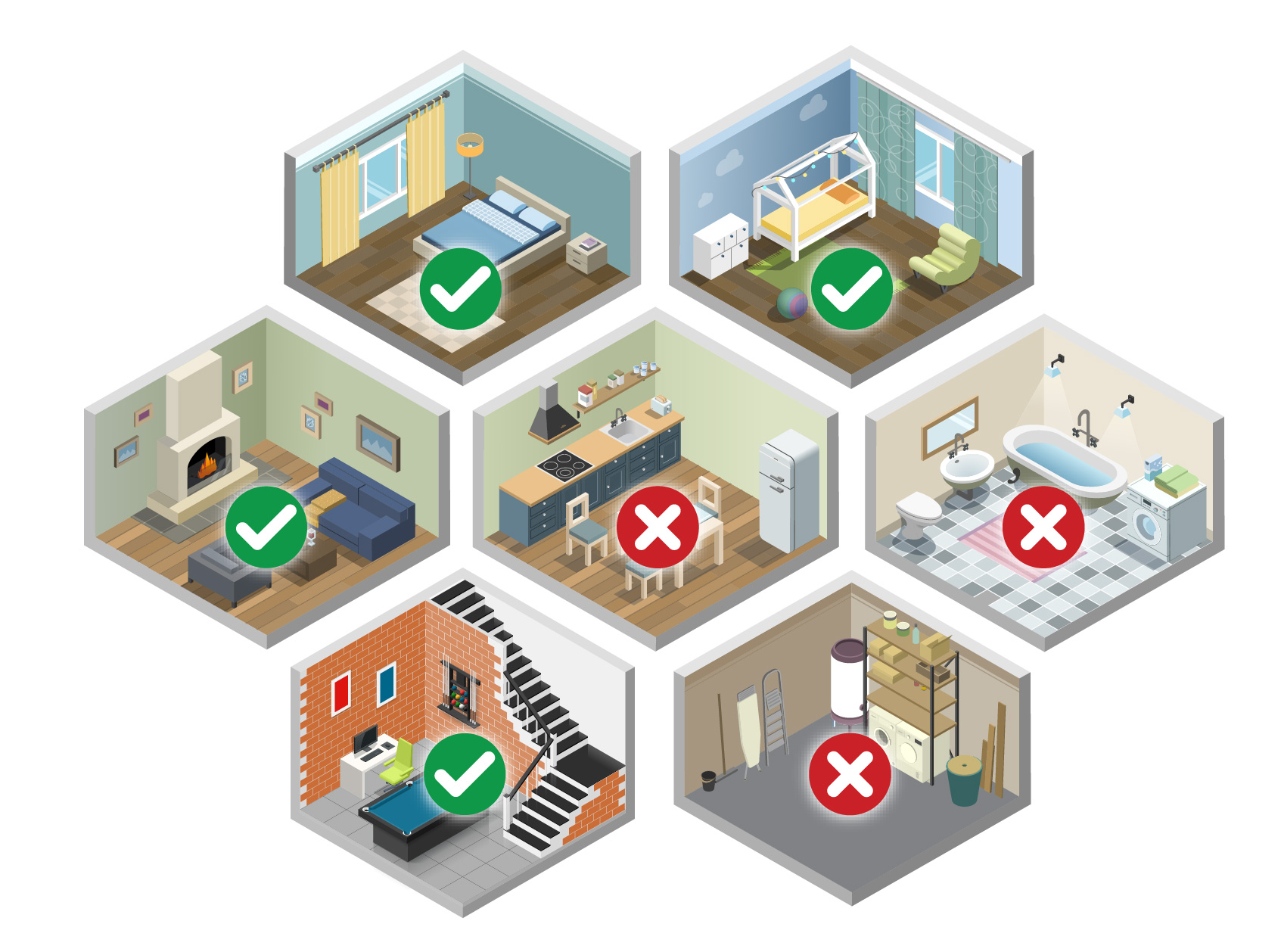
From Health Canada (2026)
For more information on choosing a room for testing visit Health Canada’s Guide for radon measurements in homes.
Place the detector correctly
After choosing the room:
- place the detector where it will not be disturbed
- allow air to circulate around the device
- position it near the typical breathing height of building occupants
Do not place the detector:
- against floors, ceilings or exterior walls
- in closets or drawers
- near humidifiers
- in direct sunlight
- near fireplaces, radiators, windows, or doors
- on vents
- beside computers, wi-fi routers, TVs, stereos, or speakers
Leave the detector in-place for at least 91 days and do not move it during the testing period.
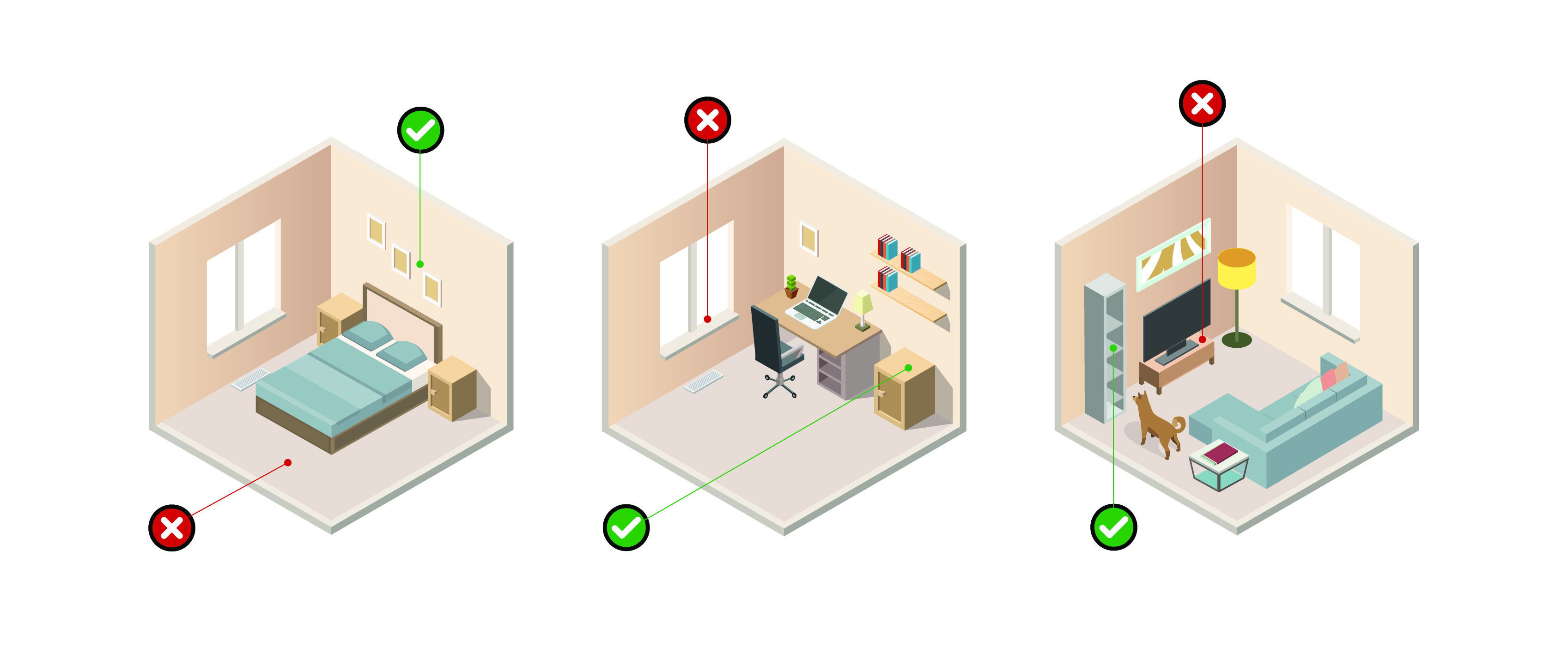
From Health Canada (2026)
For more information on detector placement recommendations visit Health Canada’s Guide for radon measurements in homes.
Return the detector
After at least 91 days:
- Collect the detector.
- Record the end date and time.
- Follow the manufacturer’s instructions for returning the detector.
Understand your test results
|
Test Result |
What to do |
|---|---|
|
Less than 200 Bq/m3 |
No corrective action required. Retest every five years. |
|
200 Bq/m3 or more |
Take corrective action within 1 year and retest. |
What happens next
If your result is below 200 Bq/m³, test again every five years.
If your result is 200 Bq/m³ or higher, take steps to reduce radon levels and test again after mitigation work is complete.